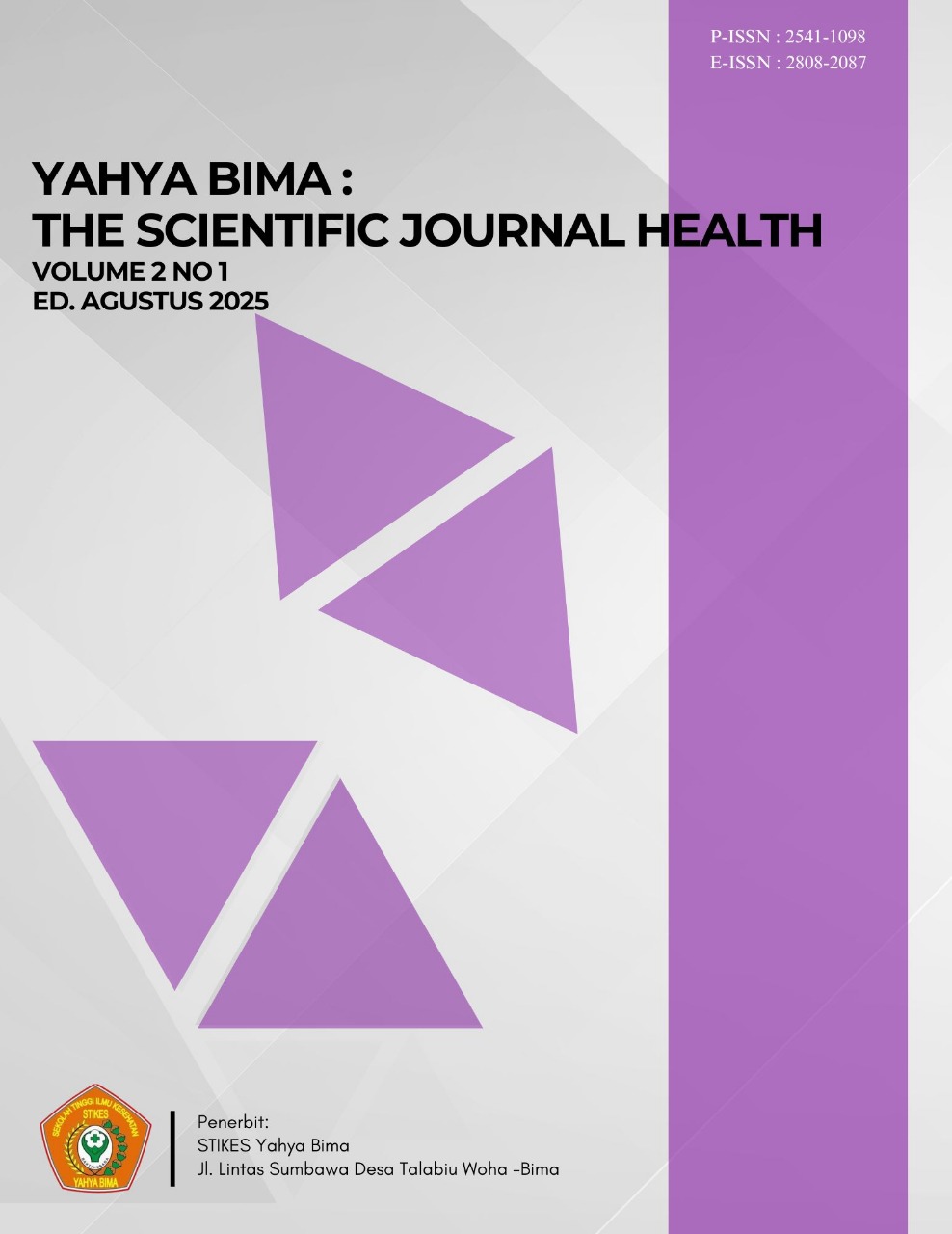
HUBUNGAN BEBAN KERJA DENGAN KINERJA DAN KELELAHAN (FATIGUE) PERAWAT DI RUANG RAWAT INAP RSUD SULTAN IMANUDDIN KOTAWARINGIN BARAT KALIMANTAN TENGAH
DOI:
https://doi.org/10.70873/tsjh.v2i1.60Keywords:
Beban Kerja, Kinerja, Kelelahan, Perawat, Rumah SakitAbstract
Background: Hospitals are healthcare institutions that operate 24 hours a day and involve nurses as the main workforce, comprising approximately 60% of the total healthcare personnel. In Indonesia, the nurse-to-population ratio is 87.65 per 100,000 people, which is significantly below the national target of 180 per 100,000. This imbalance contributes to increased nurse workloads, which can negatively affect performance and lead to fatigue, posing risks to both patient and nurse safety. Objective: This study aims to examine the relationship between workload, performance, and fatigue among nurses in the inpatient wards of RSUD Sultan Imanuddin, Kotawaringin Barat.
Methods: This research employed a descriptive correlational design with a cross-sectional approach. The sample consisted of 130 respondents selected through purposive sampling. Data were collected using validated questionnaires on workload, performance, and the Subjective Self Rating Test (SSRT) for fatigue. Data were analyzed using frequency distribution and Spearman Rank correlation test.
Results: The findings showed that nearly half of the respondents (49.2%) experienced a light workload. Most nurses (70.8%) demonstrated good performance, while the majority (70%) reported experiencing severe fatigue. Statistical analysis revealed no significant relationship between workload and performance (p = 0.472 > 0.05) or between workload and fatigue (p = 0.385 > 0.05).
Conclusion: Workload is not the primary factor influencing nurse performance and fatigue. Further research is recommended to explore other contributing factors such as psychosocial conditions, workplace support, and individual characteristics.
Downloads
Published
Issue
Section
License
Copyright (c) 2025 asrilia pangestu, ade sucipto, rahaju wiludjeng

This work is licensed under a Creative Commons Attribution-ShareAlike 4.0 International License.